Overview Product Categories Application Scenarios Solutions Selection Guide Calculators Browse Products Partner CRM
Overview Solutions
Home Solutions Direct Burial Road Crossing
Solution 02

Direct Burial Road Crossing Optical Cable Solution

Long-term stable underground cable solution for factory roads, campus roads, and perimeter security — designed to withstand vehicle loads, soil pressure, moisture, and rodent threats.

Scenario Overview

Direct burial optical cable is deployed in scenarios where underground conduit systems are unavailable or impractical — such as road crossings, perimeter routes, farmland boundaries, and inter-building paths. The cable must withstand direct soil pressure, vehicle loads, moisture ingress, and potential rodent damage.

Unlike duct cable, direct burial cable is the last line of defense — once damaged, repair requires excavation, which is costly and disruptive. Selection must prioritize long-term protection over short-term cost savings.

Key Requirement

Armored double-sheathed structure is mandatory. Steel tape or steel wire armor provides crush resistance; double PE sheath provides moisture and chemical protection.
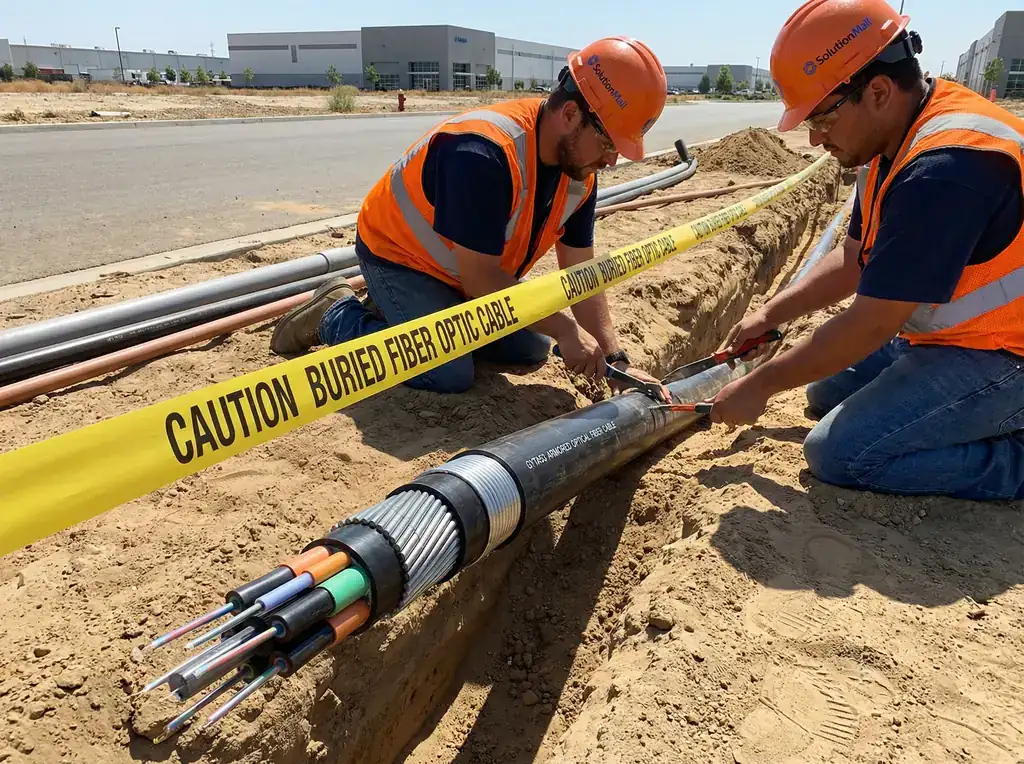
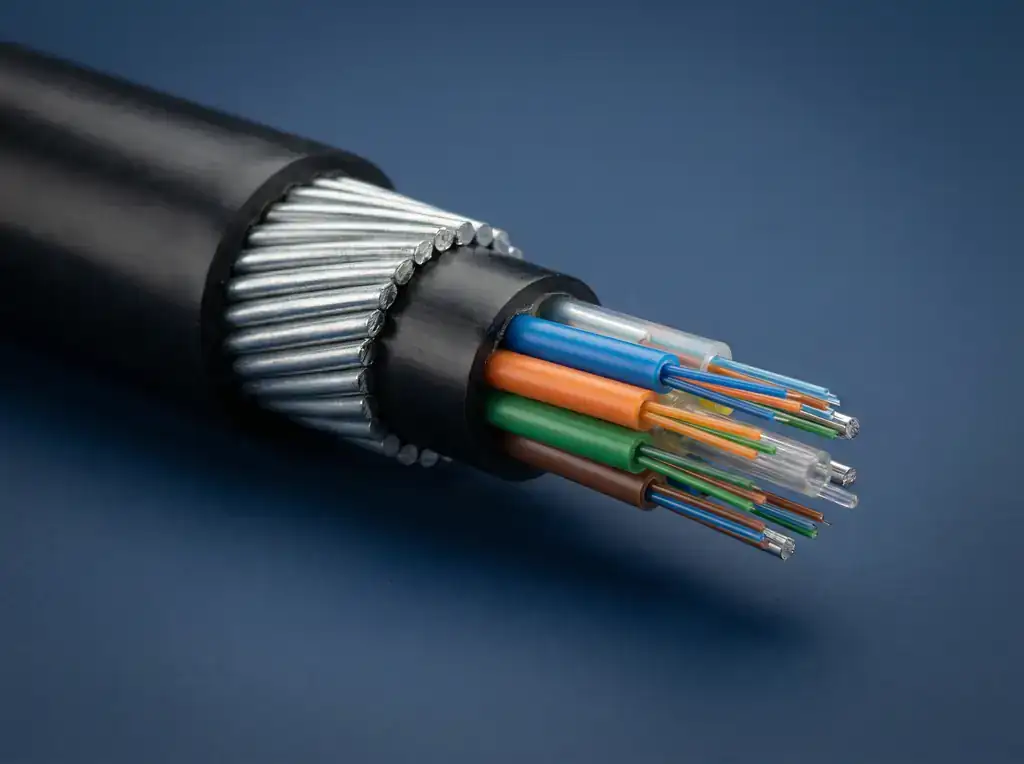
Direct Burial Cable

Cable Selection by Environment

Environment Recommended Cable Rationale
Standard Road Crossing GYTA53 / GYTS53 Steel tape armor + double PE sheath, standard direct burial protection
Heavy Vehicle Load Area GYTA53 + Conduit Protection Add HDPE conduit sleeve at crossing point for extra crush protection
High Rodent Risk Zone Anti-Rodent GYTA53 Glass fiber reinforced layer or steel tape anti-rodent structure
High Groundwater Area Gel-Filled GYTA53 Gel-filled loose tubes provide enhanced longitudinal water blocking
Corrosive Soil Anti-Corrosion Double-Sheath Special PE compound sheath resists acid-alkali soil corrosion
Armored Cable Installation

Installation Requirements

  • Burial depth: ≥0.8m for general areas, ≥1.2m for road crossings
  • Sand bed: 100mm sand cushion below and above cable
  • Warning tape: Red warning tape at 300mm above cable
  • Marker stakes: Every 50–100m and at all turns/joints
  • Road crossings: HDPE conduit sleeve, extend 0.5m beyond road edge
  • Splice points: Dome-type splice closure, buried or in manhole
  • Bend radius: Minimum 20× cable outer diameter during installation

Plan Your Direct Burial Fiber Route

Get professional guidance on cable selection, burial depth, protection requirements, and route planning for your specific site conditions.