Overview Product Categories Application Scenarios Solutions Selection Guide Calculators Browse Products Partner CRM
Overview Solutions
Home Solutions Aerial Rural Connectivity
Solution 03

Aerial Rural Connectivity Optical Cable Solution

Fast, economical aerial connectivity for rural areas and remote sites — leveraging existing pole infrastructure without the cost and disruption of underground conduit installation.

Scenario Overview

Aerial optical cable deployment is the preferred method when underground conduit is unavailable, cost-prohibitive, or when rapid deployment is required. Rural connectivity projects, inter-building links across open areas, and temporary or semi-permanent connections all benefit from aerial installation.

The key challenge is selecting the right self-supporting structure for the span length, wind load, and installation environment. Figure-8 cable and ADSS cable serve different scenarios and must not be confused.

Critical Selection Factor

Span length and wind load determine cable type. Figure-8 for short spans (<100m) on standard poles; ADSS for longer spans or power line corridors.
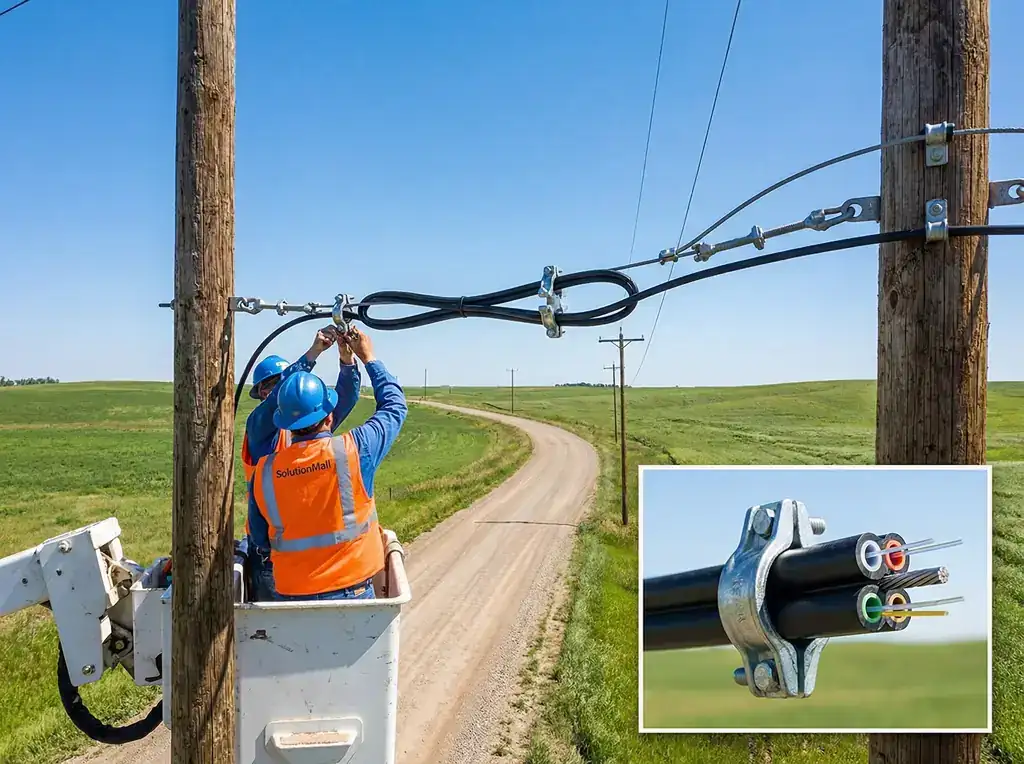
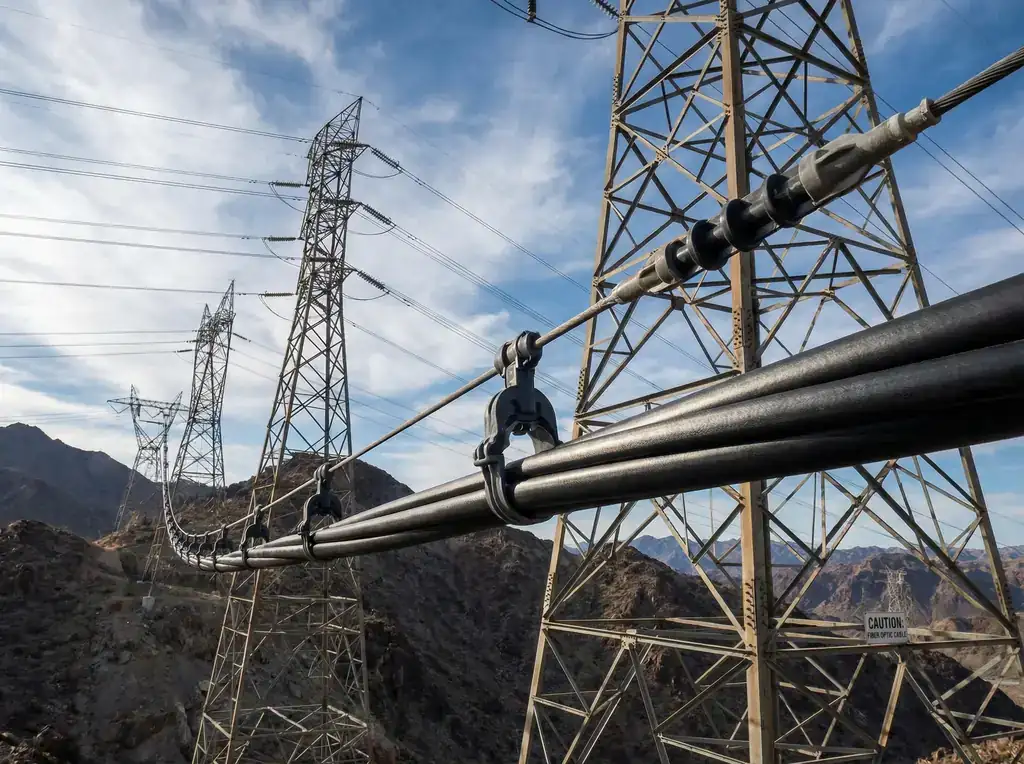
Aerial Rural Connectivity

Cable Selection by Span and Environment

Scenario / Environment Recommended Cable Selection Rationale
Short Span Rural (<80m) Figure-8 GYXTC8S Integrated messenger wire, easy pole installation, cost-effective
Medium Span (<150m) GYXTW / ADSS Short Span Self-supporting, suitable for standard pole spacing
Long Span (>150m) ADSS Medium/Long Span All-dielectric, no grounding required, suitable for power corridors
High Wind Load Area ADSS Reinforced Enhanced aramid yarn strength member, withstands high wind
Coastal/Humid Area Anti-UV GYXTW UV-resistant PE sheath, moisture-proof structure
Aerial Rural Connectivity Installation

Installation Requirements

  • Pole attachment: Use appropriate cable clamps and suspension hardware
  • Sag calculation: Proper sag prevents excessive tension in cold weather
  • Span limit: Do not exceed rated span; add intermediate poles if needed
  • Road crossings: Maintain minimum clearance height (typically 5.5m for roads)
  • Splice points: Aerial splice closures or bring cable down to ground-level closure
  • Grounding: ADSS cable requires no grounding; Figure-8 messenger wire must be grounded
  • Vibration dampers: Install at pole attachment points for long spans

Get Expert Guidance for Your Project

Our technical team provides professional selection recommendations, BOM generation, and solution design support tailored to your specific requirements.